Trekking Gear in Kathmandu. The Complete Guide to What to Buy, Where to Get It, and Why
Planning a trek in Nepal, the right gear is the difference between an amazing trip and a miserable one. In this complete guide, you’ll learn exactly what trekking gear you must have, where to buy or rent quality gear in Kathmandu
Why the Right Trekking Gear Matters in Nepal (And Why People Ignore It Until It’s Too Late)
Trekking in the Himalayas is nothing like a weekend hike back home. You’ll face fast‑changing weather, high altitude, long days on rough trails, and remote areas where there are no shops, pharmacies, or emergency services for days at a time. Good gear protects you from cold, wind, rain, and altitude. It also reduces extreme tiredness and injury risk so you can actually enjoy the world’s highest mountains in Nepal.
Many trekkers make the same mistakes:
They bring fashion style hiking jackets that look good in photos but fail in real mountain weather conditions because the mountain weather is completely different.
They wear cotton T‑shirts and jeans on the trail, then they wonder why they’re cold and uncomfortable on their Trek. We always recommend the gear that are not made up of Cotton
They skip trekking poles and wreck their knees on long descents. Using the Trekkin poles helps up to 30% on your hike.
They rent the cheapest sleeping bag they can find, then spend shivering nights above 4,000 meters. We always recommend you to Get Down Sleeping Bag for the high altitude.
This guide is here to help you avoid those mistakes and short recommendations for the trek on your quick glance when you look at these points. We’ll tell you what actually works on Nepal’s trails, what you can safely skip, and how to get it all in Kathmandu without wasting money.
Essential Trekking Gear You Must Have: The Real‑World Checklist
Use this as your master checklist. We’ll note “must‑buy” vs “can rent” so you can plan your budget and decide what to bring from home versus what to get in Kathmandu.
Clothing & Layering System
The key to staying comfortable in the mountains is layering. You need to be able to add or remove layers as temperatures change throughout the day.
Base layers (must‑buy)
Moisture‑wicking thermal tops and bottoms (merino wool or synthetic). Avoid cotton—it holds moisture and makes you cold in your trek.
Bring at least two sets so you can rotate one while wearing the other.
For winter treks or high‑altitude routes, choose mid‑weight to heavy‑weight thermals. For spring/autumn treks, light to mid‑weight is usually enough.
Insulating mid‑layer (must‑buy)
Fleece jacket or light down/synthetic insulated jacket.
This is your main warmth layer when you’re moving during the day.
Fleece is great for active warmth and breathability, Down is lighter and warmer but less effective when wet so the main concern for the Down jacket is to keep it dry. Use you Ponchu or hardShell Jacket to protect it when it is rainy or snowing alot.
Insulated down or synthetic jacket (can rent, but often better to buy)
A −10°C to −25°C rated down jacket is essential for evenings, rest days, and high camps.
You can rent these in Kathmandu and also with us, but buying ensures you get the right size, and the color that you love, warmth rating, and hygiene.
Always choose water‑resistant down or synthetic fill if you’re trekking in monsoon or expect wet conditions.
Waterproof & windproof outer shell (must‑buy)
Waterproof and breathable jacket (Gore‑Tex or similar).
Waterproof pants (full‑zip side panels are convenient for putting on over boots but you can choose what you would like to have, we do have both).
These are crucial for monsoon treks, unexpected snow, and windy passes.
Trekking pants (must‑buy)
Quick‑dry, durable trekking pants. Convertible pants (zip‑off to shorts) are versatile.
Avoid jeans—they’re heavy, slow to dry, and uncomfortable for long days.
Consider bringing two pairs so you can rotate in your Trek.
Headwear and Handwear
Warm beanie or fleece hat for cold mornings and evenings.
Sun hat or cap with a brim for UV protection during the day.
Inner glove liners (thin, moisture‑wicking) plus insulated outer gloves for cold days and high passes.
Buff or neck gaiter to protect your face and neck from cold wind and sun.
Socks (must‑buy)
3–4 pairs of quality trekking socks (merino wool or synthetic blend).
Avoid cotton socks—they cause blisters.
A mix of mid‑weight and thick socks depending on your boot fit and season.
Footwear
Your feet are your engine. If they’re not happy, you’re not happy. So never compromise on you shoes.
Trekking boots (must‑buy or rent early to test fit)
Sturdy, ankle‑supporting trekking boots with good grip.
For classic treks like EBC and Annapurna Circuit, mid‑cut hiking boots are usually sufficient.
For technical or winter treks, you may need stiffer, warmer boots.
Break them in thoroughly before your trek to avoid blisters. If you rent, do it early enough to test and adjust according to your feet that will make you more comfortable during your trek.
Camp shoes or sandals (highly recommended)
Lightweight camp shoes, sandals, or flip‑flops for evenings in teahouses for relaxation .
Gives your feet a break from boots and keeps your sleeping area cleaner.
Gaiters (optional but useful)
Trekking gaiters keep snow, mud, and small particles out of your boots.
Especially useful for winter treks, high passes, and muddy monsoon trails.
Backpack & SleepBags
Backpack (must‑buy for fit and comfort)
30–65L backpack depending on trek length and whether you’re carrying your own gear or using a porter.
Look for a good hip belt, adjustable torso length, and rain cover.
A well‑fitted pack makes a huge difference over multiple days of trek that helps in weight distribution and makes you feel more comfortable.
Sleeping bag (can rent, but buying is often better)
−10°C to −20°C rated 4‑season sleeping bags for most popular treks.
For winter or high‑altitude treks, consider a −20°C to −30°C bag.
Renting is common, but buying avoids hygiene concerns and guarantees the warmth rating and fit.
Sleeping bag liner (must‑buy)
Lightweight liner adds warmth and keeps your sleeping bag cleaner.
Merino or silk liners are comfortable and compact.
Also Fleece Liner is ok for more warmth but it will be bulky that may increase your weight.
Trekking & Navigation
Trekking poles (can rent; highly recommended)
Adjustable trekking poles reduce strain about up to 30% on knees and improve balance.
Especially useful on long descents and river crossings or the passes.
You can rent these cheaply in Kathmandu, but buying ensures more comfort according to your choice.
Headlamp + spare batteries (must‑buy)
Essential for early morning starts, power cuts in teahouses, and nighttime bathroom trips.
Choose a bright, lightweight LED headlamp with multiple modes.
Water purification (must‑buy)
Water purification tablets (e.g. AquaTabs) or a portable filter.
Bottled water is available on many treks but is expensive and environmentally unfriendly.
Treat all water from taps, streams, and refill stations. Using the Aquatabs and Water filter make it more safe to drink.
Sunglasses and sun protection
UV400 sunglasses (category 3 or 4 for high altitude).
High‑SPF sunscreen (50+) and lip balm with SPF.
The sun is intense at altitude; sunburn and snow blindness are real risks.
These are the must haves with you in your trek. It helps us to protect your eye and skin in harsh condition on your treks
Health & Safety
Basic first‑aid kit (must‑buy)
Include:
Plasters and blister care (e.g., Compeed Blister Plaster).
Antiseptic wipes or solution.
Painkillers (paracetamol).
Anti‑diarrheal medication.
Rehydration salts.
Any personal prescription medications in original packaging.
NOTE: The above mentioned list is just to make aware but always contact with experienced and licensed Pharmacy or Medicals.
Altitude sickness preparation
Talk to your doctor or trekking guide about altitude sickness prevention.
Some trekkers carry diamox (acetazolamide) as a preventive, but this should be discussed with a medical professional.
Know the symptoms: headache, nausea, dizziness, fatigue, shortness of breath.
Never ignore symptoms; descending is the only cure for serious altitude illness.
Hygiene essentials
Hand sanitizer.
Wet wipes and Toilet Paper (many teahouses charge for TP).
Small quick‑dry towel.
Biodegradable soap if you care about environmental impact.
Optional but Useful Extras
Dry bags or pack liners to keep clothes and electronics dry.
Power bank (10,000–20,000 mAh) and a universal Travel Adapter.
Camera with extra batteries and memory cards.
Binoculars for wildlife and distant peaks.
Lightweight travel pillow for long bus rides and flights.
Earplugs and eye masks for noisy teahouses and early sunrises.
Notebook and pen for logging your trek or filling out permits.
Tip: For popular treks like Everest Base Camp, Annapurna Circuit, and Langtang Valley, the above list covers 90% of needs. If you’re doing high‑altitude, technical, or winter treks, add warmer layers, a higher‑rated sleeping bag, and possibly crampons or an ice axe depending on the route.
Where to Buy (or Rent) Trekking Gear in Kathmandu
Ocean Trekking Gear
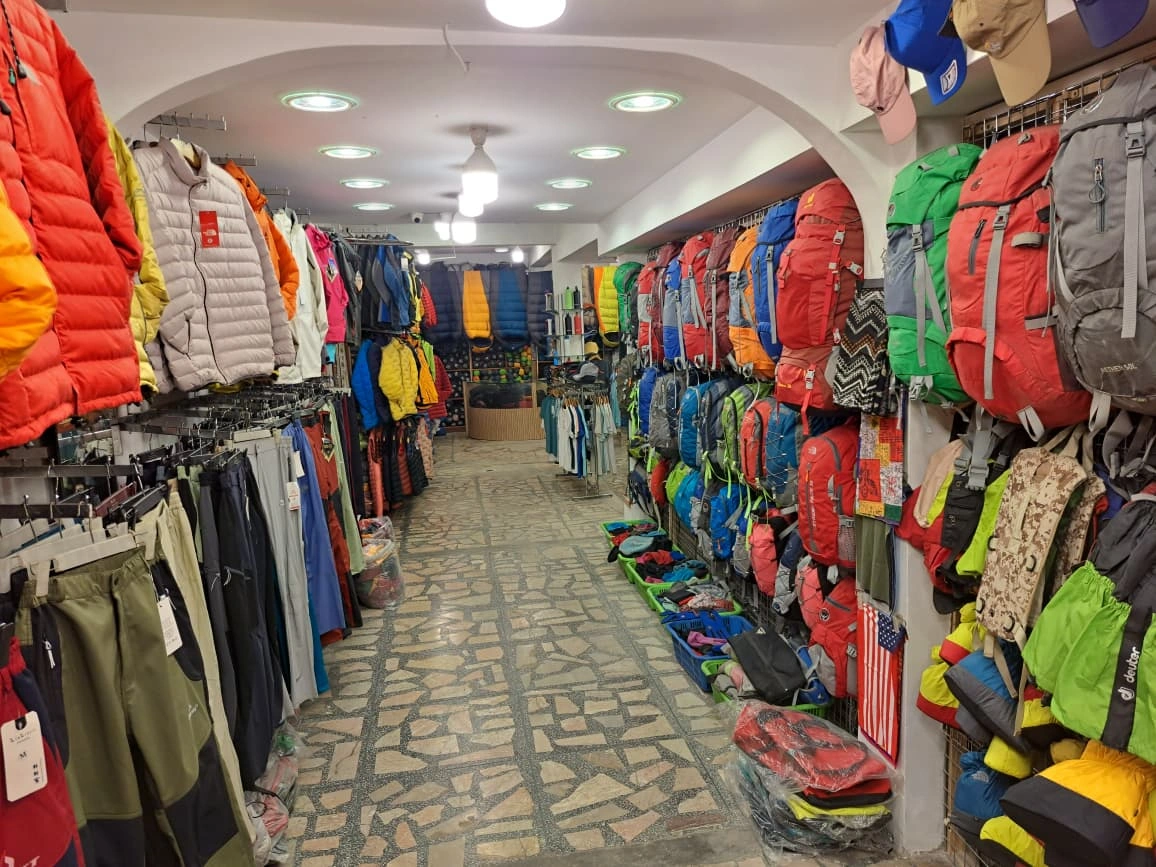
Ocean Trekking Gear is a dedicated trekking and outdoor equipment store in Thamel, Kathmandu, built specifically for trekkers and outdoor explorer. From Everest Base Camp to Annapurna, Langtang, Manaslu, and local hikes, it offers everything you need under one roof at Ocean Trekking Gear.
What Makes Ocean Trekking Gear Different?
Everything in one place
Down jackets, sleeping bags, trekking boots, poles, trousers, base layers, sunglasses, water bottles, backpacks, and accessories all designed for high-altitude.
Recognised for offering reasonable, transparent prices compared to many shops that make proper gear accessible for budget travelers and many more.
Expert guidance,
Staff help you choose the right gear for your specific trek, experience level, and season so you don’t overbuy or end up with unsuitable equipment.
Trusted by locals, Trekking Companies, Guides, and Tourists around the World.
Convenient location and hours
Located in Thamel, Kathmandu,Nepal. Open daily from around 8:30–9:00 AM to 10:00 PM, making it easy to visit before or after your trek and for Timing you can check on Google Map it is always updated.Customer support & delivery
We offers customer support by phone, WhatsApp, E-mail and can arrange delivery across Nepal and Internationally,
Who Should Shop Here?
First-time trekkers who need a complete, reliable gear list without stress.
Budget-conscious travelers who still want warm, durable gear for Everest base Camp (EBC), Annapurna, Langtange, Mansalu, Mardi himal, and etc.
Experienced trekkers looking for good-value extras (spare layers, accessories, replacement items).
Groups and agencies wanting a single trusted supplier for multiple people.
Buying vs Renting: What Makes Sense for You?
When to buy
You trek regularly or plan multiple treks.
You want guaranteed hygiene for items like sleeping bags, base layers, and socks.
You need a perfect fit for boots, backpacks, and clothing gear.
You prefer having gear you know and trust rather than random rental equipment.
When to rent
You’re on a tight budget and only plan to trek once.
You want to test gear before committing to a purchase.
You only need certain items for a specific trek (e.g., a very warm down jacket for a winter trek).
Typical rental items: down jackets, sleeping bags, trekking poles, and sometimes boots and backpacks but to rent boots are a bit difficult because of sizes and the available model
Typical rental costs (approximate, subject to change)
Down jacket: NPR 150–400 per day.
Sleeping bag (−10°C to −20°C): NPR 150–300 per day.
Trekking poles: NPR 100–200 per day.
Backpack (50–70L): NPR 150–300 per day.
Boots: NPR 200–400 per day.
NOTE: Above are the Estimated Prices depending on the quality and the Temperature Ratings
Customer Support
+977-9818510275 (Call & WhatsApp)
+977-9818335825 (Call & WhatsApp)
E-mail:[email protected]
Website: www.oceantrekkinggear.com